Authenticity at Pashmirah Textiles

Authenticity at
Pashmirah Textiles

At Pashmirah Textiles, authenticity is not defined by description or appearance. It is defined by practice.

The way Pashmina has been made historically is the way it must continue to be made today if its character is to remain intact. Our role, as custodians of this craft, is to ensure that this continuity is not broken, even as Pashmina moves within a modern context.

What follows is not a history lesson, but a clear reflection of how this craft is actively upheld at Pashmirah Textiles today.

Origins of Pashmina

Geographic and Climatic Origins

Authentic Pashmina originates in the high-altitude Himalayan and Trans-Himalayan regions, where altitude, temperature, and terrain collectively shape the nature of the fibre. These regions experience long, severe winters with extreme cold and low humidity. It is this environment, rather than human intervention, that enables the development of the exceptionally fine undercoat from which Pashmina is derived.

The conditions required for this fibre to form are geographically specific and cannot be reproduced artificially. As a result, genuine Pashmina remains inseparable from its place of origin.

Historical and Cultural Significance

For centuries, Pashmina has held cultural and material significance far beyond its function as a textile. Originating from the Himalayan regions of Ladakh and Kashmir, it entered wider history through trade routes that connected Central Asia, Persia, and the Indian subcontinent. By the 16th century, Pashmina had become closely associated with the Mughal court, where emperors valued it for its warmth, fineness, and refinement-qualities unmatched by other textiles of the time.

Beyond the subcontinent, Pashmina gained prominence in Europe during the late 18th and early 19th centuries. Empress Joséphine Bonaparte, wife of Napoleon Bonaparte, famously possessed an extensive collection of Kashmiri Pashmina shawls, helping establish their status among European royalty and aristocracy.

Pashmina evolved as a craft shaped by environment, necessity, and human skill. Its continuity has depended on the careful preservation of material knowledge and practice, passed through generations and sustained as a living tradition rather than a commercial system.
Where Pashmina Begins

Where Pashmina Begins

Authentic Pashmina begins with the Changthangi goat, native to the high-altitude Changthang Plateau.

The extreme cold of this region produces an exceptionally fine undercoat, which has always been the foundation of true Pashmina. Because this fibre is delicate by nature, it has never lent itself to industrial handling. Historically, it was combed, cleaned, and prepared by hand. That is still how Pashmirah Textiles works with it today.

The fibre is allowed to retain its natural behaviour. It is not forced into uniformity, blended, or processed for speed. This decision determines everything that follows.

The Authentic Pashmina Process

The Authentic
Pashmina Process

The Eleven (11) Traditional Stages in the
Making of a Pashmina

Step 1 — Ethical Fibre Collection

Pashmina fibre is collected during the spring season when the Changthangi goat naturally sheds its winter undercoat. The fine fibres are gently hand-combed rather than shorn, ensuring the animal is not harmed or stressed. This traditional practice respects the natural lifecycle of the goat and preserves the integrity of the fibre.

Step 2 — Fibre Sorting and Cleaning

Once collected, the raw fibre is manually sorted to separate the fine Pashm from coarse guard hair and other impurities. This is a meticulous process carried out by hand, as even slight variations affect the final quality. The fibre is then washed using water only, without chemical detergents, to retain its natural softness and character.

Step 3 — Carding

Carding gently loosens the fibres and begins the process of alignment. Using traditional tools, the fibres are separated and aerated to prepare them for spinning. Care is taken to preserve fibre length and fineness, as excessive force or mechanical processing would damage the delicate structure.


Step 4 — Combing and Refinement

After carding, the fibres are further refined through wooden combing. This step removes any remaining impurities and aligns the fibres uniformly in one direction. The result is a clean, smooth fibre bundle ready for transformation into yarn.


How the Fibre Becomes Yarn

How the Fibre
Becomes Yarn

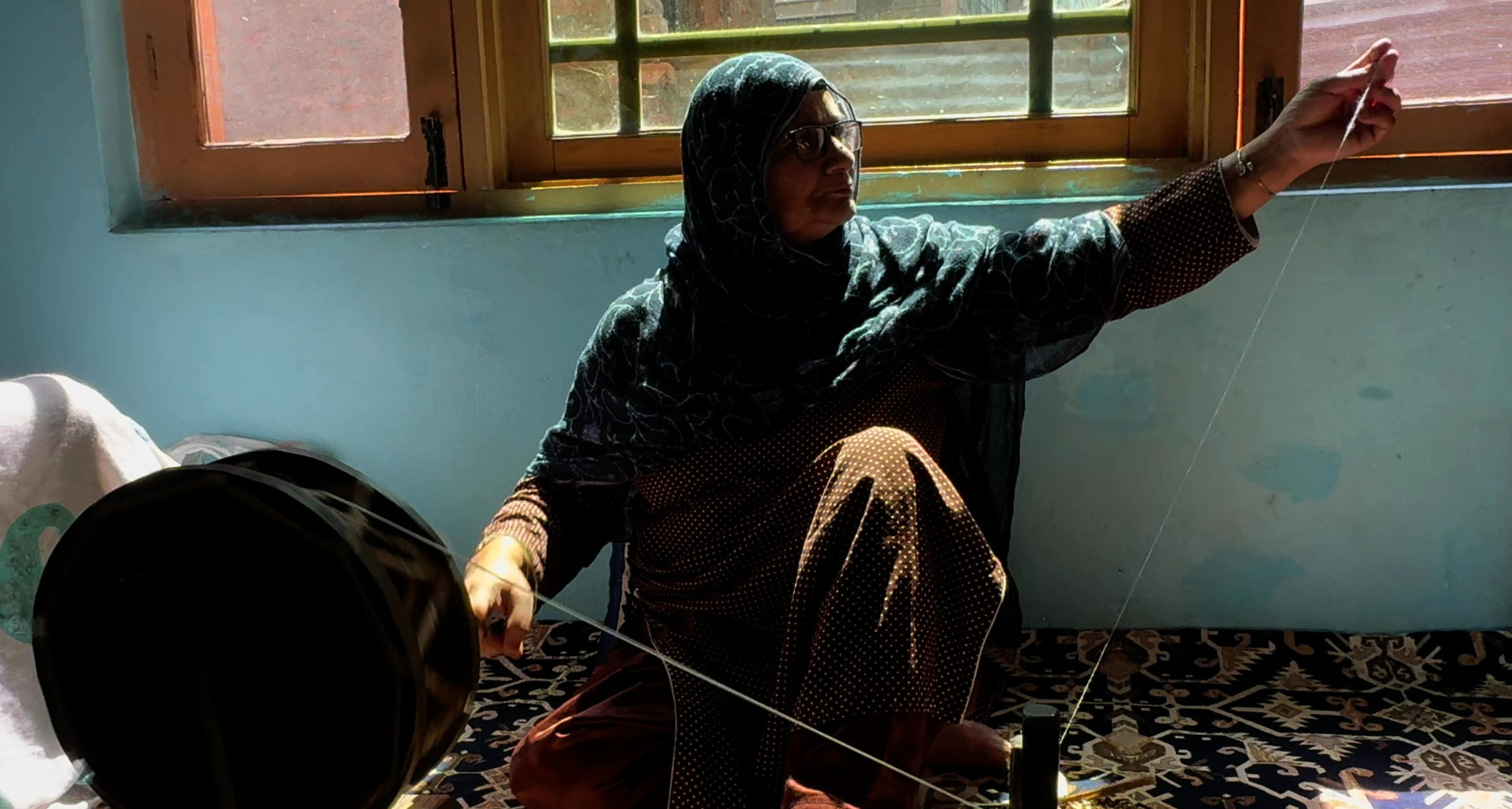
Once prepared, the fibre is hand-spun, a practice that remains central to authentic Pashmina. The refined fibre is hand-spun using a traditional spindle or spinning wheel. This stage relies entirely on the skill and experience of the spinner, who controls the thickness and consistency of the yarn through touch and movement.

Pashmirah Textiles preserves this practice because it produces yarn that can withstand traditional weaving while retaining the lightness Pashmina is known for. This is not an aesthetic preference. It is a structural requirement.

Step 6 — Yarn Preparation, Conditioning and Dyeing

Once spun, the yarn is conditioned through careful twisting, balancing, and bundling to enhance durability while maintaining softness and natural lustre. Yarn quality is traditionally assessed by fineness and consistency rather than weight.

Where colour is required, dyeing is carried out either at the yarn stage or later at the fabric stage, depending on the design. Dyeing is performed by skilled dyers using fibre-safe, non-toxic dyes that allow the colour to absorb naturally into the yarn. Subtle variations in shade are a hallmark of this hand-dyed process and reflect its authenticity.

Step 7 — Pre-Weaving Preparation

Before weaving, the yarn is prepared for the loom. It is separated into warp and weft, strengthened using natural starch sizing, and manually wound onto spindles and bobbins. This preparation ensures the yarn can withstand the tension of weaving without breaking.

Weaving as a Discipline

Weaving in Kashmir has always been a disciplined, human-led process.

Traditional looms allow the weaver to respond to the yarn as it moves, maintaining balance and alignment over long hours of work. This responsiveness is essential, especially when working with ultra-fine Pashmina yarn.

Certain traditions demand even greater discipline. Kani weaving, guided by Talim codes rather than visual patterns, requires the weaver to interpret instructions continuously, often over extended periods. Jama and all-over patterned shawls require sustained focus so that design remains consistent across the entire surface.

These techniques were historically practiced for royal courts because of the time and mastery involved. Pashmirah Textiles supports artisans who continue to practice them today in their authentic form.

Traditional Crafts Used in Pashmina (Design-Dependent)

Traditional Crafts
Used in Pashmina

Handwork and Embellishment

In traditional Kashmir Pashmina, embellishment is never separate from the fabric itself.

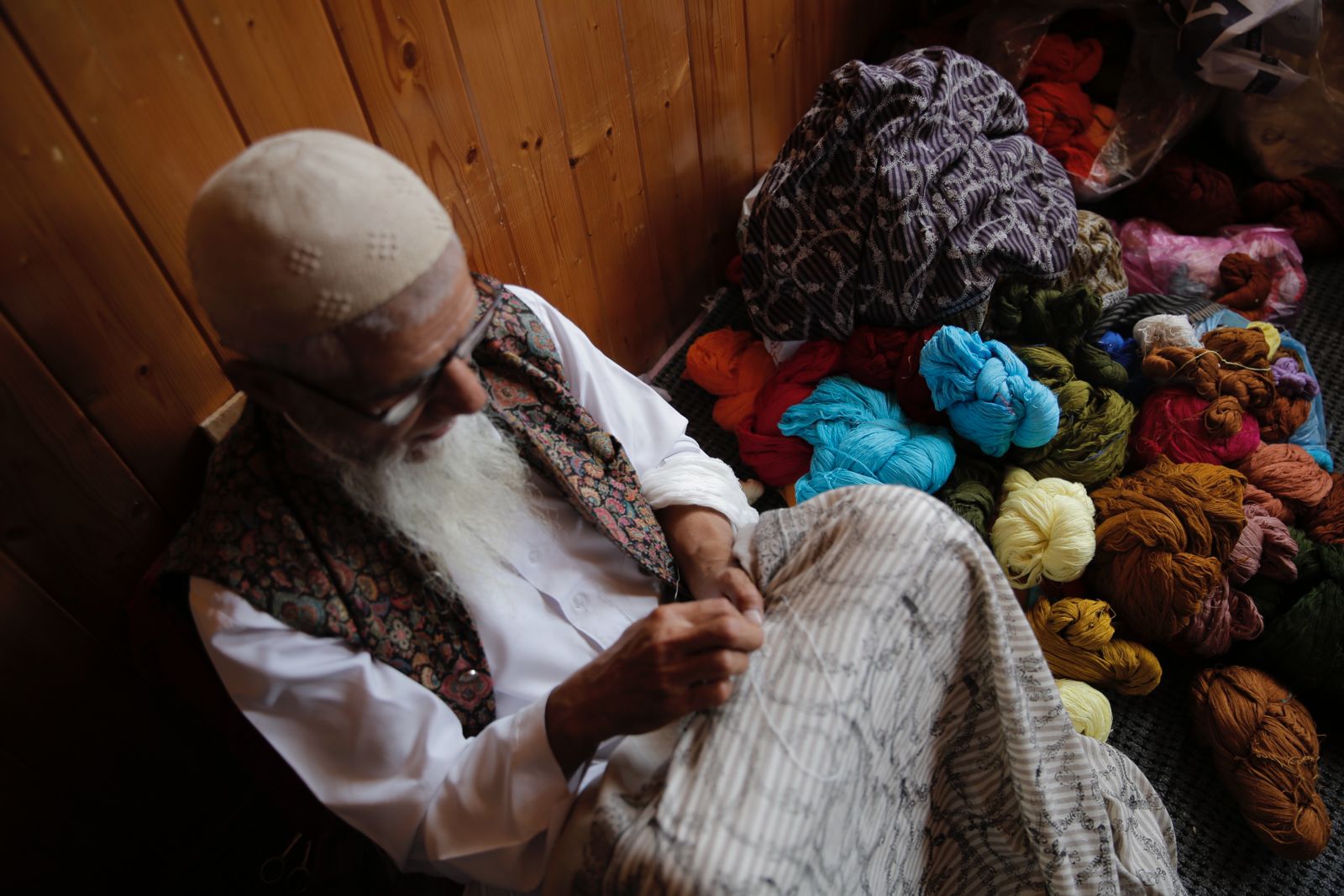
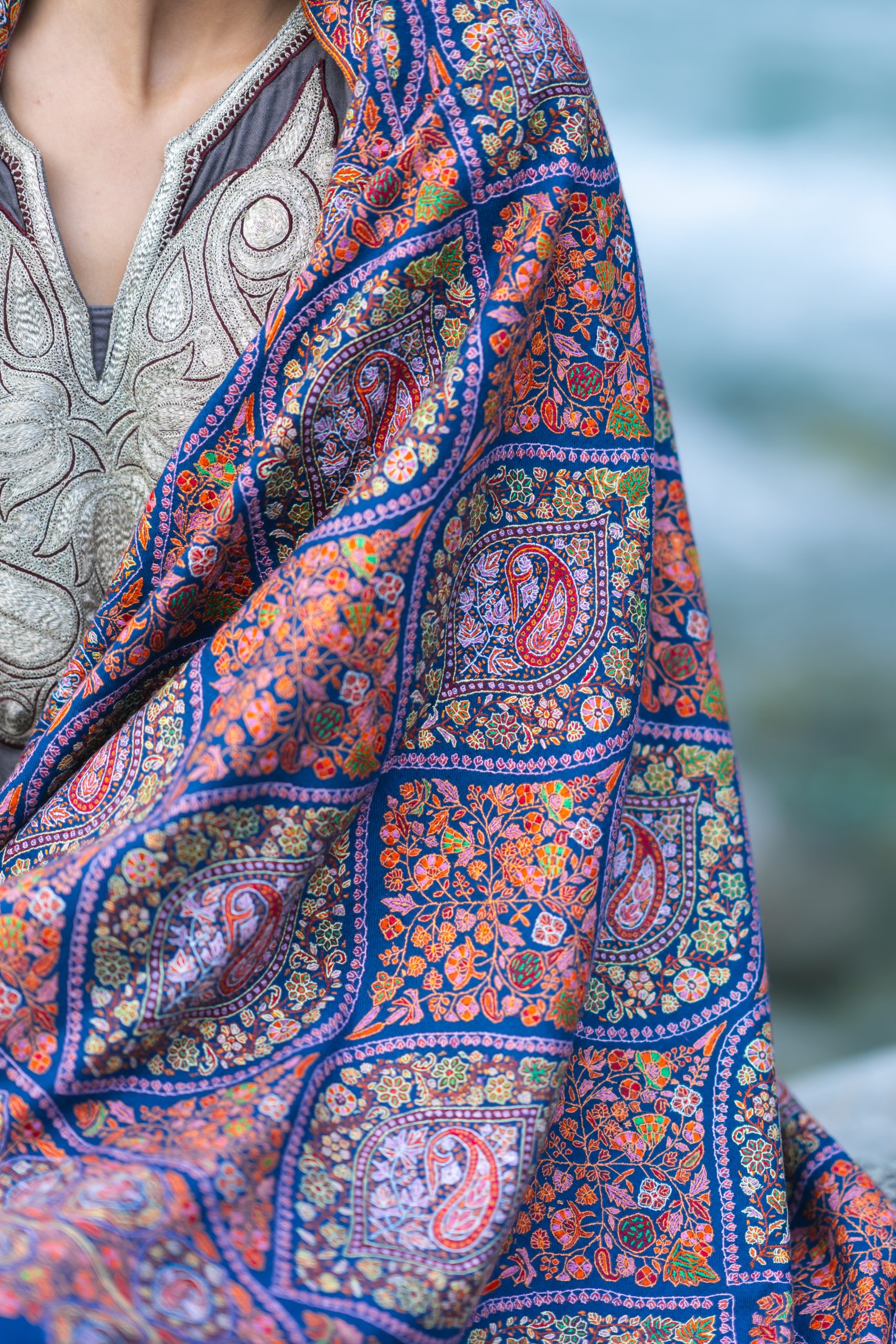
Sozni embroidery is executed with such fineness that it becomes part of the weave rather than sitting on top of it. Tilla work, using metallic threads, requires careful preparation of the base fabric so that drape and balance are not disturbed.

These forms of handwork extend the making process significantly. They also demand judgment about when and how embellishment is appropriate. Pashmirah Textiles ensures that such work is undertaken with the same discipline as weaving, respecting both the fabric and the artisan’s skill.

Why Time Cannot Be Reduced
Why Time Cannot
Be Reduced

Authentic Pashmina has always taken time.

Some pieces are completed over months. Others, particularly those involving Kani weaving or dense hand embroidery, take several years. These timelines are not exceptional. They are inherent to the techniques themselves.

Pashmirah Textiles does not attempt to shorten these timelines. Allowing the craft to move at its natural pace is the only way to preserve its balance, texture, and integrity.

Step 10 — Post-Craft Finishing and Surface Refinement

After weaving and any craft application, the fabric undergoes surface refinement. Protruding fibres and irregularities are manually brushed, clipped, and corrected. Edges and fringes are refined to enhance both durability and appearance, ensuring the textile meets the highest standards of finish.

Step 11 — Washing, Softening and Pressing

The final stage involves washing the fabric in cold water to remove sizing and impurities. Through repeated handling, the Pashmina softens naturally, developing its signature drape and texture. The fabric is then pressed or calendared to achieve a smooth, elegant finish.

Custodianship Today

What Pashmirah Textiles does is simple in principle and demanding in practice.

We uphold the same material choices, hand processes, techniques, and timelines that have defined authentic Pashmina for centuries. We support artisans who carry this knowledge forward. And we ensure that what reaches the customer reflects the craft as it truly is, not as it has been adapted for convenience.

Custodianship Today

What Pashmirah Textiles does is simple in principle and demanding in practice. We uphold the same material choices, hand processes, techniques, and timelines that have defined authentic Pashmina for centuries. We support artisans who carry this knowledge forward. And we ensure that what reaches the customer reflects the craft as it truly is, not as it has been adapted for convenience.

TOP